GLOWING SEAS
Plankton that flash
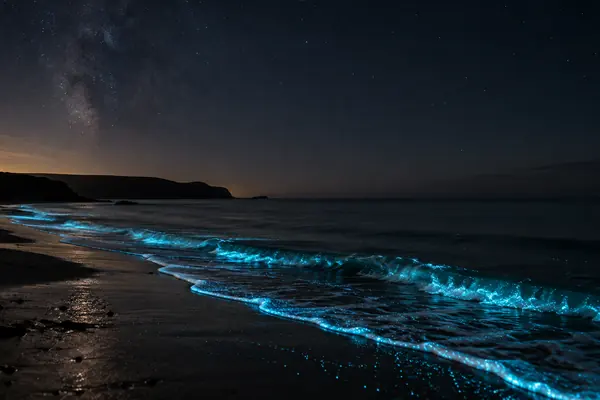
The sparkle in waves comes from dinoflagellates, single-celled plankton that give off a blue-green glow when the water around them is disturbed.
Which glow was it?LIVING LIGHT
Kick the shallows on the right night and the water flashes blue-green.
That light is made by tiny plankton, using the same kind of chemistry that lights deep-sea fish and a few British fungi. Here is how living light works, and where people in Britain have seen it.
blue-green the colour of most sea light
THE SHORT ANSWER
Living light comes from a reaction inside the organism.
Fluorescence is different: it needs light shining in first.
GLOWING SEAS
The sparkle in waves comes from dinoflagellates, single-celled plankton that give off a blue-green glow when the water around them is disturbed.
Which glow was it?GLOWING FUNGI
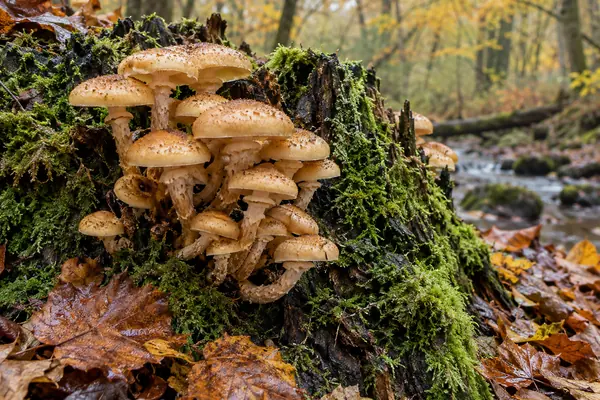
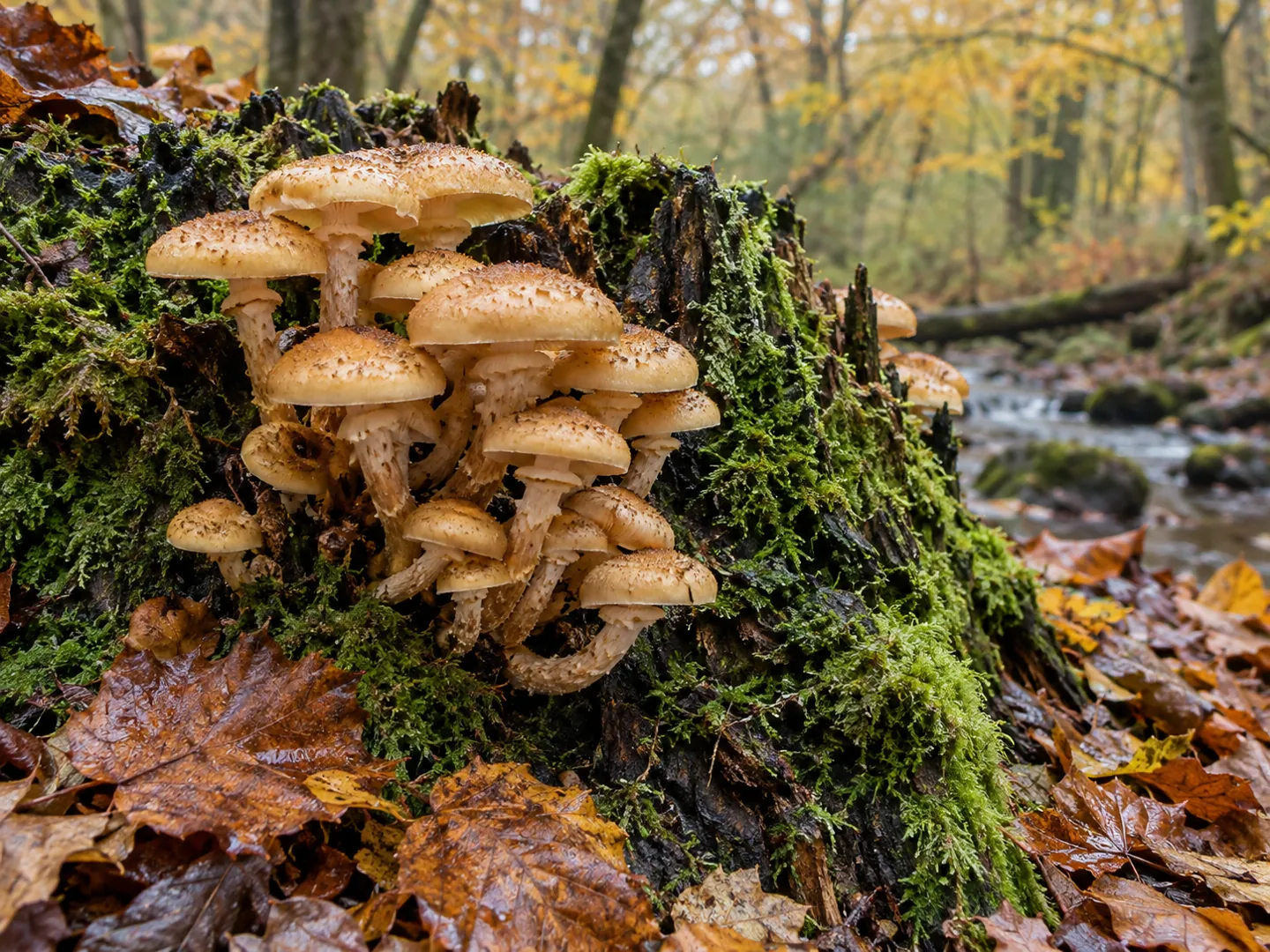
About 75 species of fungi can glow, mostly in tropical forests. In Britain, honey fungus mycelium can give off a faint glow at night.
See the numbersUV GLOW
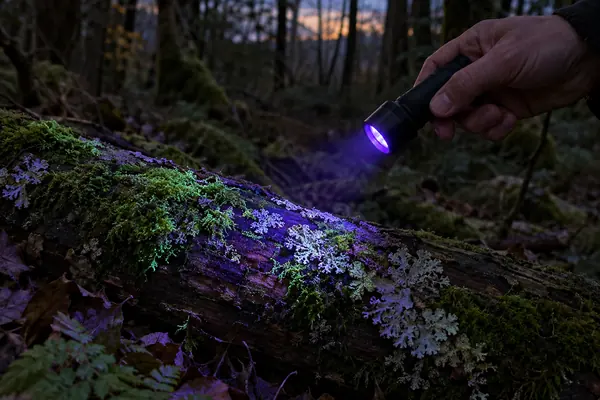
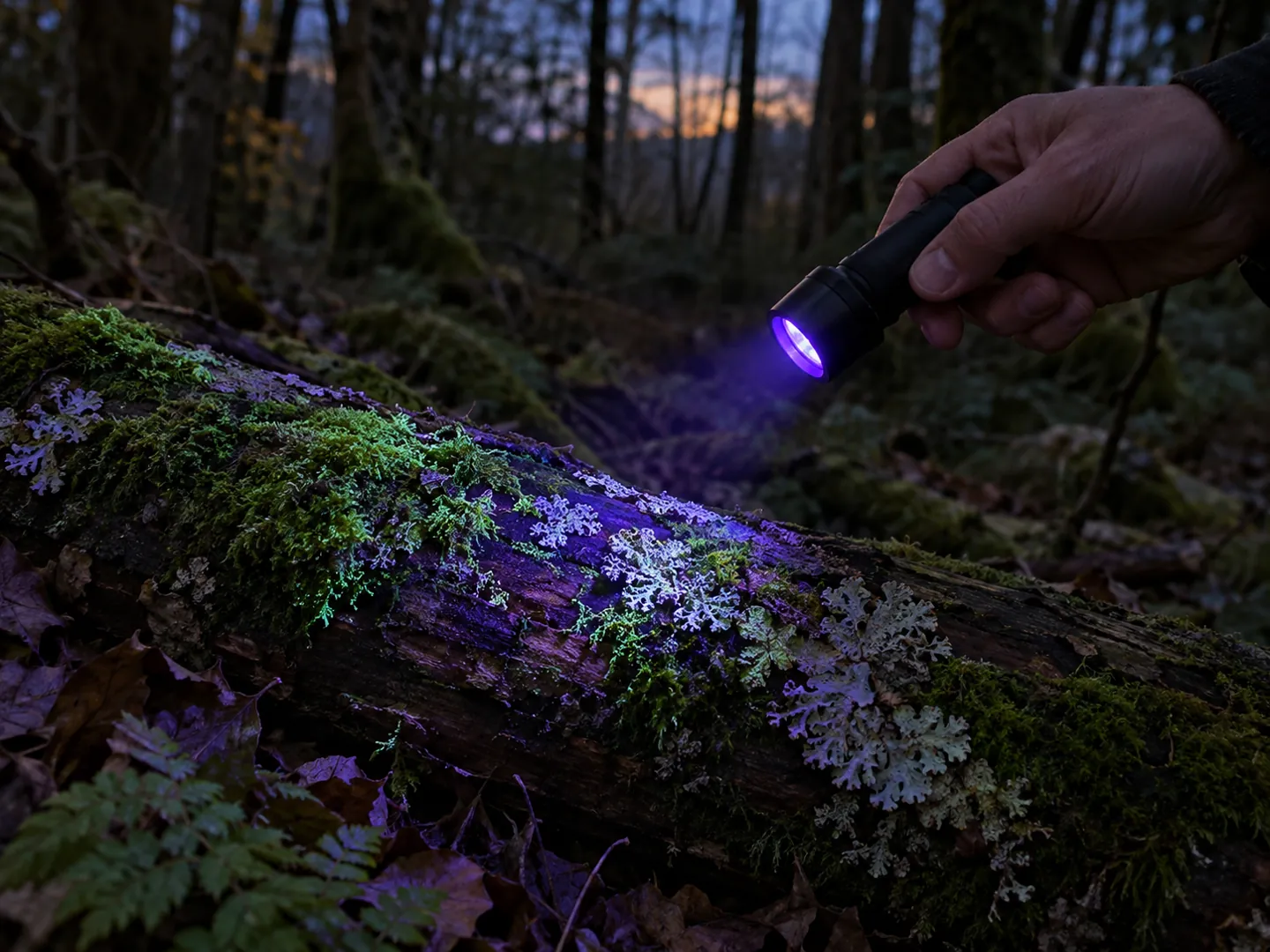
Under a UV torch many fungi, mosses and lichens shine. That is biofluorescence: they absorb light and send it back as a different colour.
How it differsA QUICK GLOW CHECK
Pick what you saw to find out what was probably making the light. The bar shows how easy the RHS says each one is to find in the UK.
Based on the Royal Horticultural Society's guide to glowing organisms in the UK, and the Natural History Museum.
TWO NUMBERS WORTH KNOWING
One figure from the dark middle of the ocean,
one from the forest floor.
up to 90%
Life in the ocean's twilight zone thought to make light
The Natural History Museum says up to 90% of life in the twilight zone, 500 to 1,000 metres down, creates light in some form.
THE TWILIGHT ZONE · NHM
≈ 75 species
Species of fungi that can give off a green glow
About 75 species of fungi can glow, possibly to attract insects that spread their spores. Most live in tropical rainforests, which is why British examples are faint and few.
FUNGI · NHM
NOAA notes that bioluminescence is not as rare in the ocean as you might think: most types of animals, from bacteria to sharks, include some bioluminescent members.
FOUR WAYS TO LOOK
Living light is faint and unpredictable. These simple habits, drawn from the RHS guide and the science of how the glow is triggered, give you the best chance.
Visit at dusk or after dark. The glow is faint, so your eyes need time away from torches and phone screens.
Plankton light up when disturbed. Lab studies found shear and acceleration together set off the strongest flashes, as in breaking waves.
For fungi, mosses and lichens, the RHS suggests a UV torch with a 365 nm wavelength for the strongest effect.
Respect wildlife habitats, and remember a spot that glowed one year may not glow the next.
GLOW OR FLUORESCENCE?
Bioluminescence happens when a molecule called luciferin reacts with oxygen, helped by an enzyme, and the energy comes out as light. The Natural History Museum says sea light is mostly blue and green, because those colours travel furthest through water.
Biofluorescence is different. NOAA describes it as organisms absorbing light, transforming it and giving it out as a different colour. That is why a UV torch is needed: switch it off, and the glow disappears.
Questions
Tiny single-celled plankton called dinoflagellates give off a blue-green light when waves or movement disturb them. By day they can look like faint orange clouds in the water.
The RHS says glowing waves occasionally appear in autumn and early winter and that sightings are quite unusual. Countryfile reported a surge on the Welsh coast during the hot summer of 2018.
The RHS lists sightings including Dunraven Bay and the Gower in South Wales, Kynance Cove in Cornwall, St Bees in Cumbria, Botany Bay in Kent and parts of the Norfolk coast.
NOAA says bioluminescence is typically used to warn or evade predators, to lure or find prey, and to communicate with members of the same species. For plankton, the RHS says it is thought to confuse predators.
A few, faintly. The RHS names honey fungus, whose mycelium can glow at night, and sulphur tuft, which gives a very faint light. Candlesnuff fungus shows a glow only with a long camera exposure.
Sources
ABOUT THIS NAME
doodleglo.com is part of the DoodleSale portfolio. It isn't in an auction right now, but you can ask about leasing it.